How Road Safety Data Is Being Used Across the Region
Reliable evidence plays an important role in informing both policy discussions and public understanding of road safety. In 2025, the APRSO and the Asian Transport Observatory (ATO) jointly developed road safety country profiles covering 37 countries across Asia and the Pacific.
Each profile brings together data from multiple international and national sources, alongside a structured review of institutional arrangements and policy frameworks across transport, urban development, health, climate, and related sectors. Rather than focusing only on fatality counts, the profiles provide context on who is most affected by road crashes, how risks vary by road user group, and how road safety performance relates to broader development outcomes, including economic costs where available.
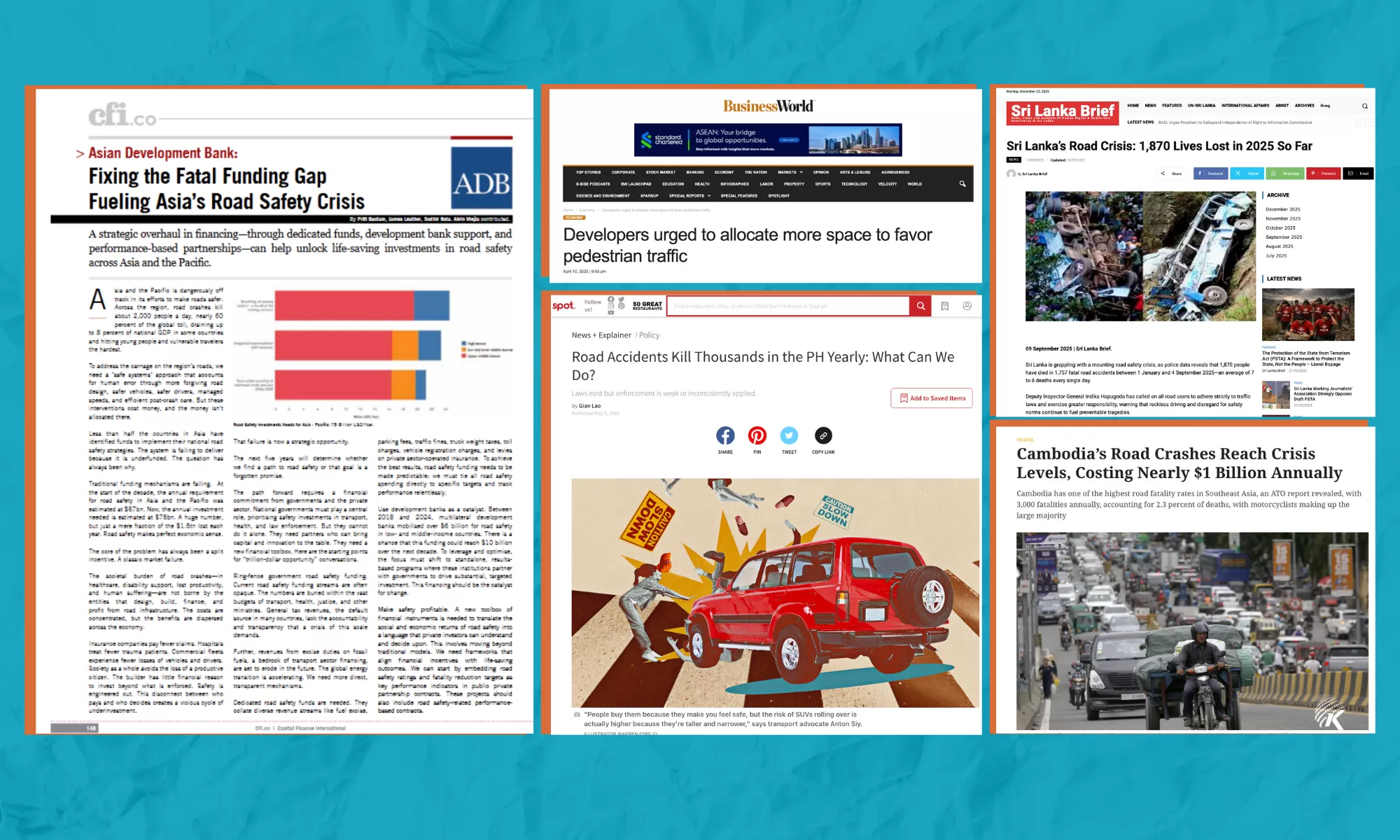
The profiles were first released in February 2025 and updated in September 2025 ahead of the Asia-Pacific Regional Road Safety Conference held at the Asian Development Bank headquarters in Manila. Since then, selected findings have been referenced in media reporting in several countries.
In Sri Lanka, coverage has drawn attention to the share of road traffic deaths involving children and older people, as well as estimates of annual economic losses equivalent to around 3% of GDP. In the Philippines, reporting has cited data on economic losses from road crashes and road safety ratings for motorcyclists. In Cambodia, media articles have referenced fatality rates relative to regional averages and the scale of economic costs associated with road traffic injuries.
These examples illustrate how consolidated, comparable data can help frame national conversations on road safety in more concrete terms. APRSO and ATO continue to make the profiles publicly available to support discussion among policymakers, practitioners, researchers, and partners, and to provide a common evidence base for further analysis and actions.
See the ATO road safety profiles here.