APRSO and its members for UN Global Road Safety Week
APRSO and its members collaborated on a communication campaign showcasing how their own country and organization promote safer walking and cycling.
From 12–18 May 2025, the 8th United Nations Global Road Safety Week took place. This year’s event focused on action at national and local levels to make walking and cycling safe, by highlighting concrete and specific interventions that can be taken by different stakeholders—governments, international agencies, civil society, businesses, and schools.
APRSO Chair, Sushil Dhakal
The campaign was launched with APRSO Chair, Sushil Dhakal, who shared how Nepal and APRSO are promoting safer walking and cycling across the region.
Australia
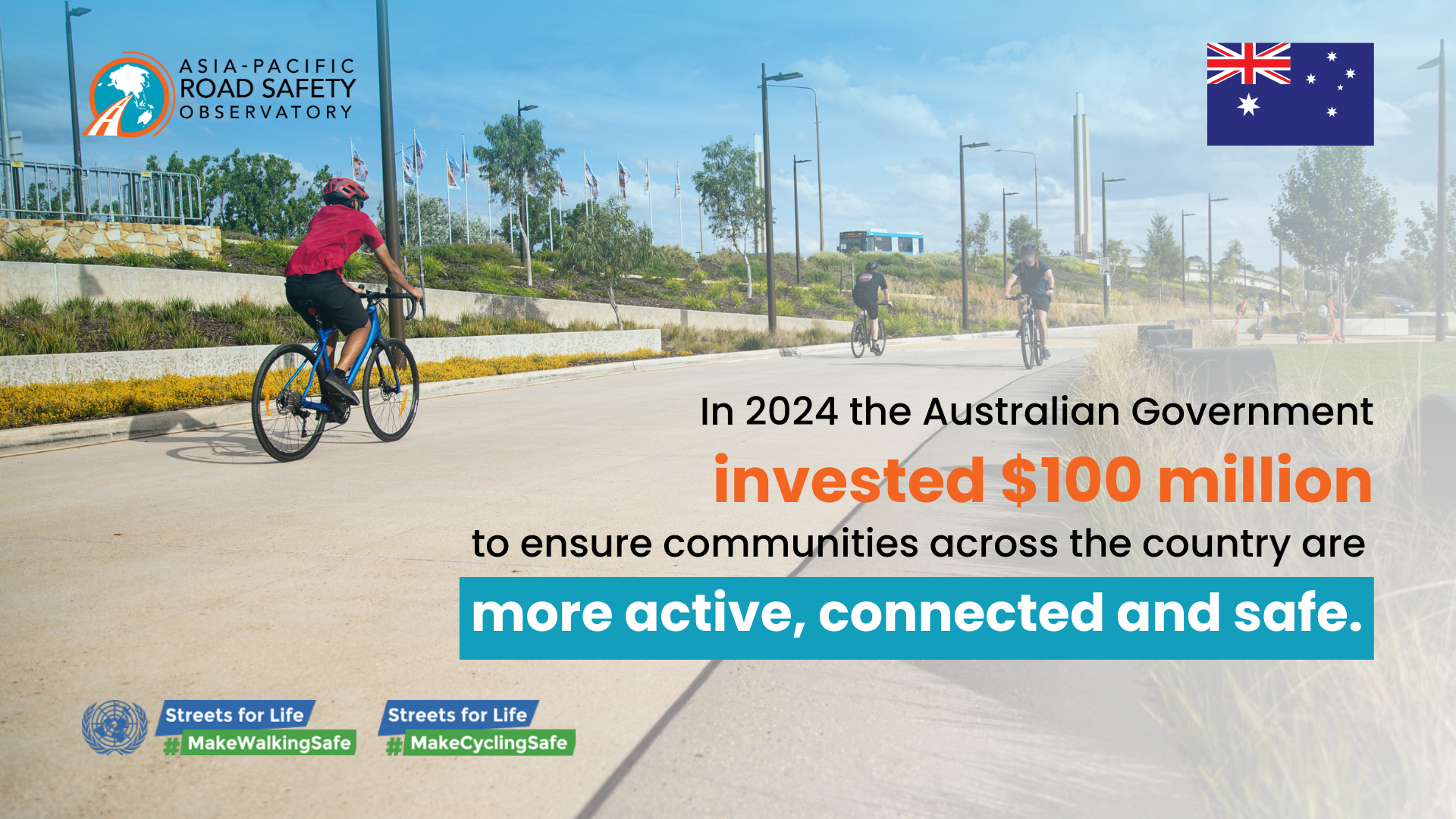
In 2024, the Australian Government invested $100 million in a new national Active Transport Fund to ensure communities across the country are more active, connected, and safe. The fund will upgrade and deliver bicycle and walking paths to support zero-emission travel, promote active and liveable communities, and provide a safer environment for cyclists and pedestrians.
Visit their website to learn more about Australia’s road safety programs: https://www.infrastructure.gov.au/
Maldives
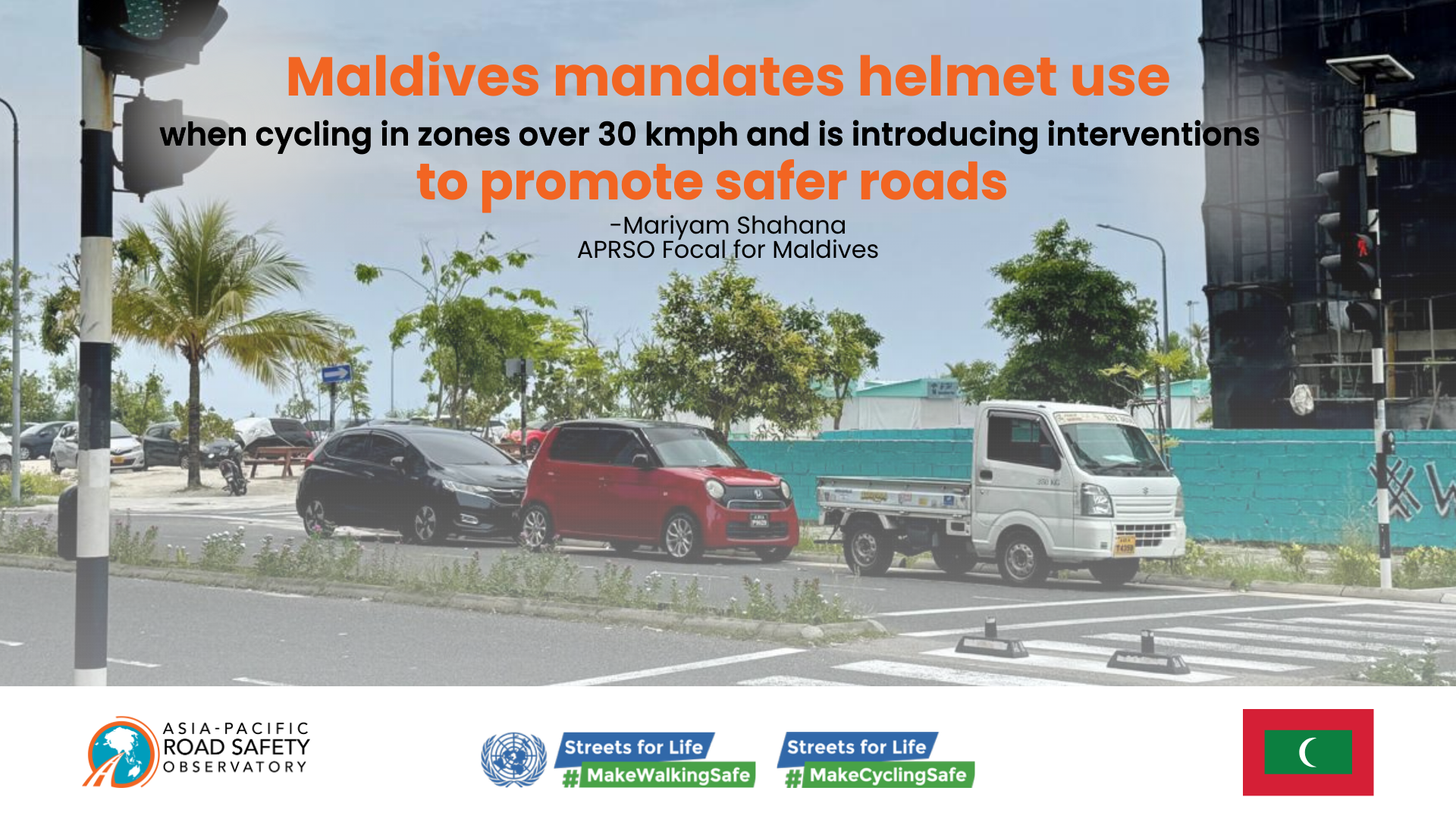
The Government of Maldives mandates helmet use when cycling in zones over 30 kmph and is introducing roundabouts to manage traffic and promote safer roads. A nationwide campaign is being launched to raise road safety awareness and encourage healthier transport like cycling and plans are underway to integrate e-bicycles as a public transport mode, recognizing the need to ease congestion and ensure safer mobility.
Visit their website to learn more about Maldives' road safety programs: https://www.transport.gov.mv/
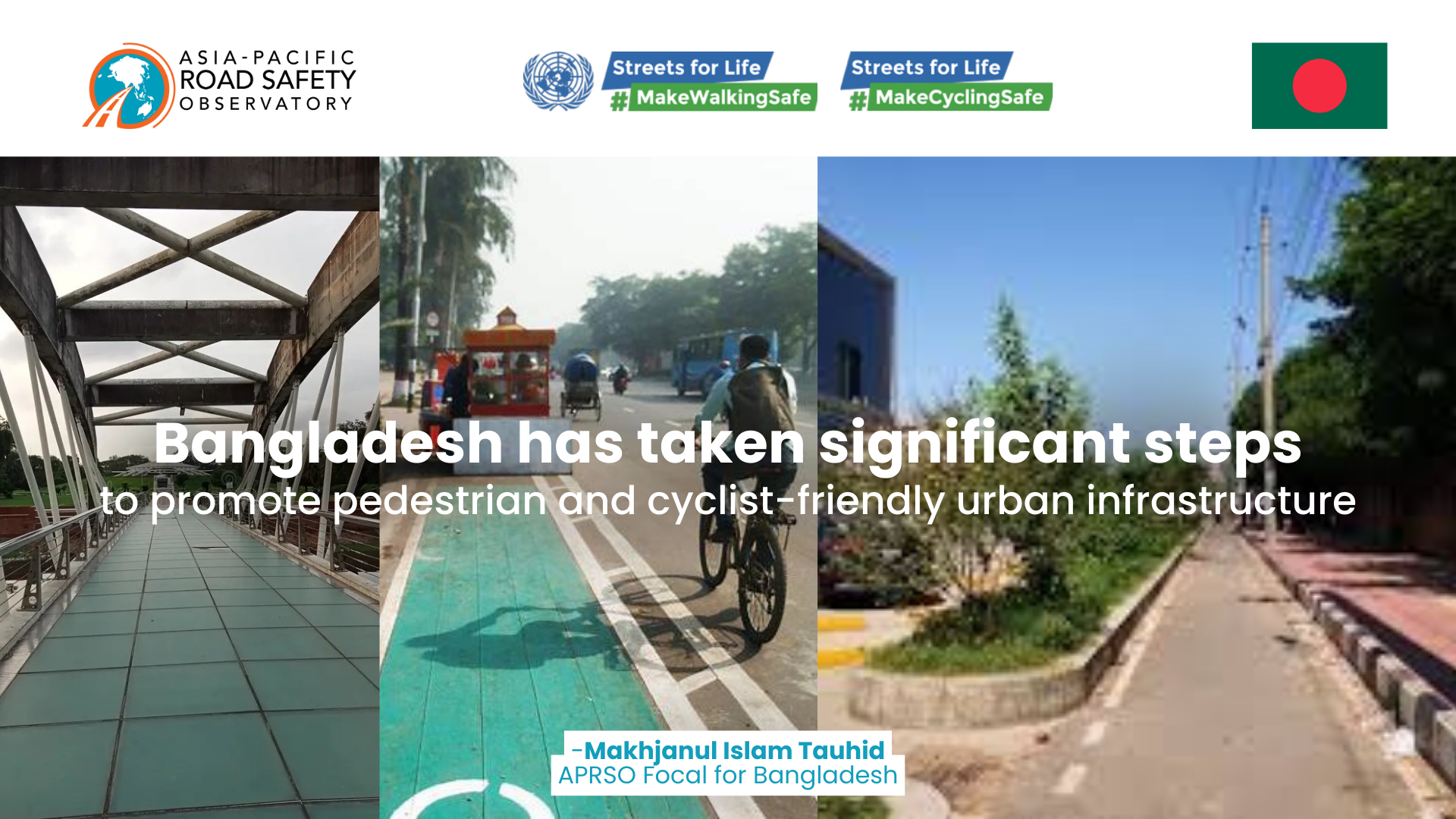
Bangladesh
and cyclist-friendly urban infrastructure. In Dhaka, a 9 km bicycle lane is being developed in Agargaon, and the Kalshi Flyover integrates both pedestrian bridges and dedicated bicycle lanes. The upcoming Hazrat Shahjalal International Airport Pedestrian Underpass is set to be the country's largest. These projects are aligned with the Revised Strategic Transport Plan (RSTP), which formally recognizes cycling as a transport mode and promotes separate infrastructure for safety. Together, these reflect a growing policy focus on sustainable, inclusive urban mobility in major cities like Dhaka and Chattogram.
Visit their website to learn more about Bangladesh' road safety programs: http://eservices.rthd.gov.bd/about.php
Papua New Guinea
Papua New Guinea, through the Road Traffic Authority (RTA) and local governments, is working to promote walking and cycling by integrating non-motorized transport infrastructure into urban development plans and advocating for healthier, low-emission transport choices in alignment with national sustainable mobility goals.
To improve safety for pedestrians and cyclists, PNG is implementing road safety audits, constructing pedestrian crossings and footpaths in high-risk areas, and enforcing urban speed limits of 30–50 km/h, particularly near schools and markets, as part of its National Road Safety Strategy 2022–2030.
Visit their website to learn more about Papua New Guinea's road safety programs: https://rta.gov.pg/
Cambodia
Following the Government of Cambodia’s directive to promote tourism in local areas, Phnom Penh has launched a weekend walking street initiative starting from February 1, 2025. Every Saturday and Sunday evening, vehicles are prohibited in three designated zones featuring shops, restaurants, and various attractions. These include painting spaces, traditional Khmer pinpeat music, and circus performances, all aimed at enhancing the nighttime experience for tourists. As a result, this walking street not only promotes tourism but also improves road safety.
Pakistan
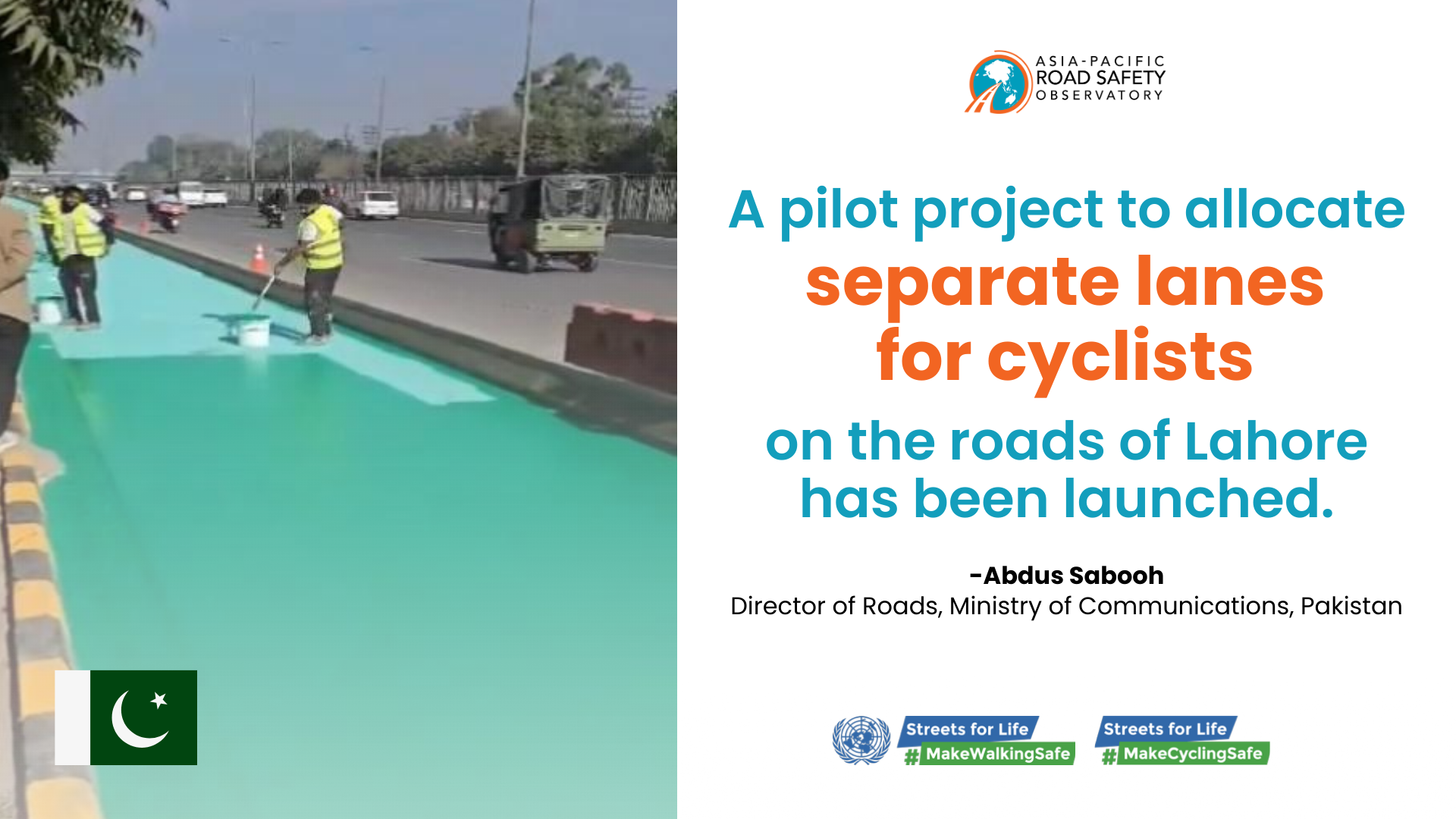
The Chief Minister of Punjab has introduced bike lanes on roads, separated by fences or small walls. She has also emphasized mandatory helmet use for bikers and proper functioning of backlights and indicators. In Phase-I, a 10-kilometer long bike lane in green and other colors is being developed from Ferozepur Road Canal Road to Lahore Bridge. The modern global concept of biker lanes will reduce crashes and bring about smooth traffic flow.
Other initiatives to improve active mobility include painted zebra crossings for children near schools and improvement in bus stands, including installing clean drinking water, fans, and comfortable seating.
The recent initiatives of the Government of the Punjab show their commitment to help make walking and cycling safe for users within the province.
Turkey
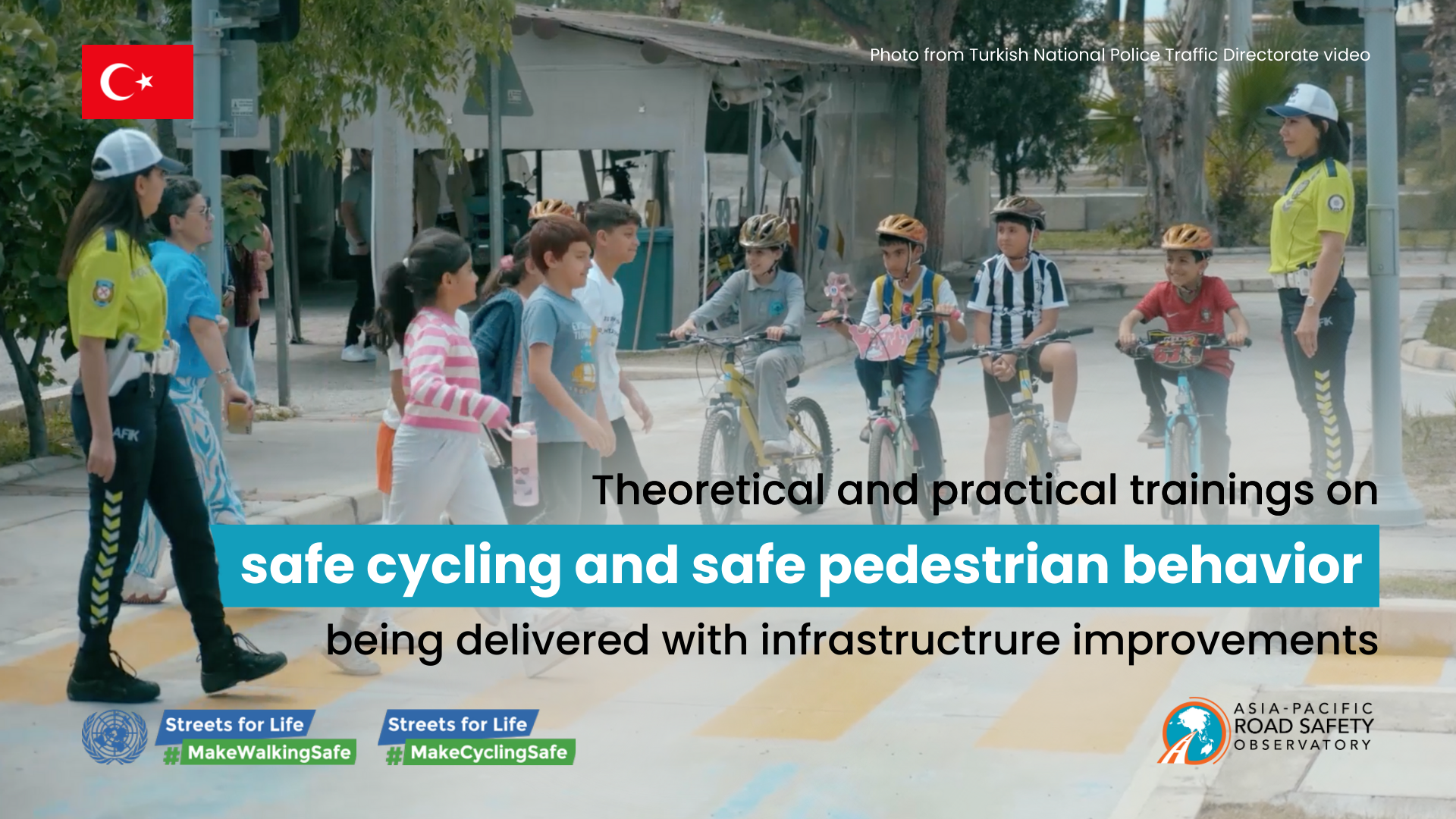
Within the scope of the Road Traffic Safety Strategy Document 2021-2030 and the Road Traffic Safety Action Plan 2024-2027 the Turkish National Police Traffic Directorate provides theoretical and practical trainings on safe cycling and safe pedestrian behaviour through “Mobile Traffic Education Trucks”, “Children Traffic Education Parks” and “Traffic Detectives Project” in order to raise awareness on traffic safety among primary and secondary school students.
These are supported with:
🌏 Bicycle roads and bicycle routes are created in accordance with world standards.
🚲 Special routes have been extended to separate cyclists (including e-scooters) from motorized vehicles.
⚠️ Awareness campaigns are organized with the participation of public figures such as leaders, athletes, and artists to promote public transport, cycling, and pedestrian mobility.
✍🏼 Theoretical training is also provided to adults on safe cycling, safe e-scooter use, and pedestrian safety.
Hemant Tiwari, ADB
The campaign was concluded with a message from Hemant Tiwari, Senior Transport Officer of Asian Development Bank (ADB). He talks about how Government of Nepal and ADB are working together in designing and building safer road infrastructures to protect the most vulnerable groups in the country.